
Adams County Criminal Docket Searches
Indiana Courts Case Search, MyCase is the main online channel. It publishes nonconfidential Odyssey information from both Adams courts. A known case number is the best key. The Case tab also accepts a citation or cross-reference number. A Name search works with last and first name. Court, status, and filing dates help narrow a statewide result set.
Online access is only one route. Call the Adams County Clerk at 260-724-5309. Visit 112 S. 2nd Street, Room A, Decatur, or mail a copy request there. The official form may be emailed to clerksoffice@adamscounty.in.gov. The Clerk can identify the court, check current financial data, and calculate copy costs.
- Read the prefix and choose Circuit or Superior in MyCase.
- Search the exact number, or use a narrow name and date query.
- Confirm the type, court, status, and public party fields.
- Read CCS events in order and open relevant public orders.
- Ask the Clerk for a complete or certified record when needed.
Adams 01C01 and 01D01 Dockets
01C01-YYMM-F1-###### points to Adams Circuit Court. 01D01-YYMM-CM-###### points to Adams Superior Court. Each number carries the county and court, filing year and month, case type, and sequence. Hyphens and leading zeros may be optional online, but the number printed on a notice is safest.
Current misdemeanors and Level 6 felonies generally begin in Superior. Felonies above Level 6 generally go to Circuit. Nonsupport, order-linked invasion-of-privacy cases, transfers, refilings, and later higher-level charges can alter that route. The identifier controls the practical search.
Criminal Dockets: What They Show
A CCS is a chronology. It is not one judgment or the whole paper file. Its header identifies the court, filing date, type, judge, and status, and later entries can record allegations, bond activity, counsel, settings, motions, orders, financial lines, and disposition.
| Case number | Court prefix, filing period, type, and sequence. |
|---|---|
| Counts | Public offense, statute, count, and level. |
| Settings | Date, time, place, officer, and description. |
| Events | Filing, plea, motion, trial, sentence, transfer, or dismissal. |
| Money | Costs, fines, restitution, credits, and balance fields. |
| Access | Public image, restriction, redaction, or converted-event signals. |
Adams Criminal Codes Explained
Always pair a code with the court prefix, filing date, and later CCS outcome. A filed label is not a final order. MR means murder. F1 through F6 are current felony levels, while CF and FA through FD can appear in older data. CM means criminal misdemeanor, MC means miscellaneous criminal, IF means infraction, and OV means ordinance violation. A code identifies the file category. It does not prove guilt or explain the outcome.
Continued: a setting moved; the case did not end.
Under advisement: submitted for decision.
Disposition: an outcome event read with the order.
Converted event: older data imported into Odyssey.
Criminal Case Stages on the Docket
A criminal CCS often opens with the filing. Then comes an initial hearing or arraignment. That early setting addresses the accusation, rights, plea, release terms, and next date. Pretrial conferences, motions, plea settings, and trial settings may follow. Sentencing is separate from a plea or verdict. Review entries can continue after judgment.
Docket flow: Filing › Initial Hearing › Pretrial and Motions › Plea or Trial › Disposition › Sentencing
Not every Adams case uses every stage. A dismissal may end one count. A transfer may move the file, so read forward to the latest signed order instead of treating the first charge or one hearing label as final.
Adams Charges Versus Convictions
A charge row states an allegation. It is not a finding. Look farther down the Adams County criminal docket for a plea, trial result, or dismissal. Diversion, a sentencing order, or another official disposition appears there too. Open and closed are administrative status labels; neither explains the result by itself.
State statistics use separate disposition categories. Those totals help explain workload, but they cannot establish what happened in a named case. Only that case's CCS and filed orders can do so.
Read count numbers separately when a file contains more than one allegation. One count may be dismissed while another reaches a plea or trial. A sentencing entry may apply only to the count named in the order. Bond, probation, and review events also serve different purposes. When the public image is absent, ask the Clerk. Request the relevant order by title and date.
MyCase is a public index, not the certified file. CAPTCHA may appear, and broad queries can exceed one thousand results. Narrow the court and filing dates before treating similar names as the same person. Public financial data may lag. The Clerk maintains the current official balance and supplies certification.
Adams County Criminal Docket Courts
Adams Circuit Court sits at 112 S. 2nd Street C, Decatur, 260-724-5307. Adams Superior Court is at 122 S. 3rd Street, 260-724-5347. Both post weekday hours from 8:00 a.m. to 4:00 p.m. They close noon to 1:00 p.m. A hearing notice and case header control where to appear.
The elected Clerk is the common records and payment channel. For more search detail, use the county docket search. The county FAQ lists the public defender office. It sits at 313 W. Jefferson Street, Room 142, Decatur, 260-724-5365. Court and clerk staff can explain process. They cannot give legal advice.
Adams Criminal Docket Numbers
The Indiana Office of Court Services statistics show why court and code matter. In 2024, Superior disposed of 2,964 cases across all types. Those included 1,498 infractions, 450 misdemeanors, 282 miscellaneous criminal files, and 136 Level 6 felonies. Circuit disposed of 930 total cases. Its filings included 43 Level 5, 34 Level 6, and 43 miscellaneous criminal entries. These are court totals. They are not people counts.
Much of Superior's count comes from infractions and violations-bureau filings, not felony volume. The 2025 figures are provisional. They signal the current caseload, but they are not a final audited comparison.
Access Rules for Criminal Dockets
Access Rule 4 sets the baseline for public access. Rule 5 then holds back sealed material, juvenile and mental-health categories, protected victim or witness details, privileged or medical records, and temporary warrant records in stated situations. MyCase can display a sentencing order even when it leaves out most of the pleadings behind it.
Key rules:
Access Rule 5 defines excluded records and protected personal information.
Access Rule 9 supplies a verified request route in extraordinary circumstances.
Indiana Code 35-38-9 governs expungement, which can change public results.
A criminal docket that is not online still exists at the Clerk's office. Ask the Clerk whether inspection or copies are permitted, since a closed case is not automatically sealed.
Adams Criminal Records After Odyssey
Odyssey links the local CCS to statewide tools for calendars, payments, and documents. Each tool does one narrow job. The Trial Court Calendar shows participating public hearings. Traffic ePayment handles eligible citations. Neither substitutes for the event history or the Clerk’s official record. Older criminal cases may show converted events with sparse images. An earlier action can still be identified even when its papers are thin. Need a public sentencing order? Note its exact title and filing date before asking the Clerk for a copy. A case that vanished after a granted expungement calls for the current record, not an old copy. Current Indiana law and the current Clerk record control public access.
The Clerk can confirm costs, fines, restitution, credits, and the current balance. Staff will also point you to the correct court and explain forms. They cannot interpret charges or advise on a legal step. That limit helps when a CCS entry confuses you. Ask for the official document first, then get qualified advice about what it means.
Both Adams courts went live in Odyssey on August 19, 2019. Older imports may carry converted-event labels and incomplete images. The official pages that follow show three distinct parts of current access, and Rule 5 governs that access.
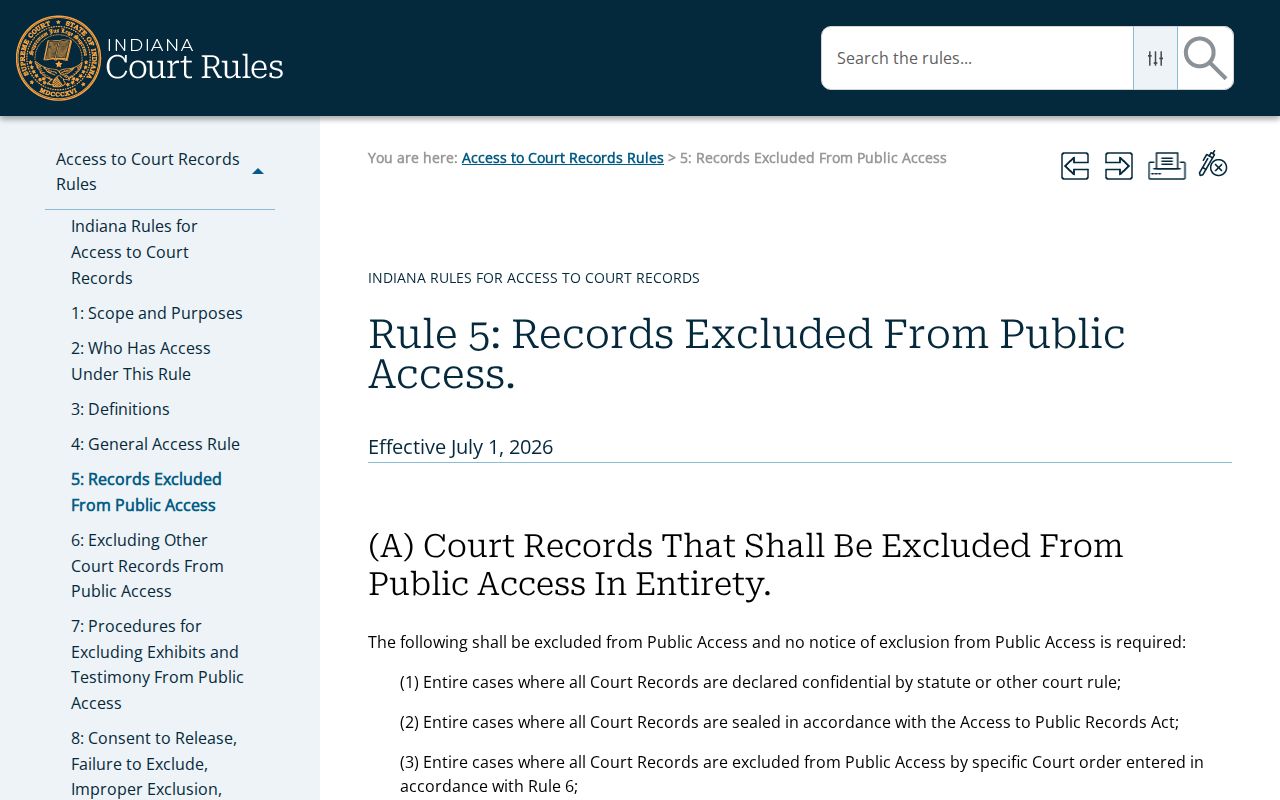
The rule explains why a case header can be visible while the papers behind it stay unavailable.
Indiana judiciary news from October 2025 recognized Adams Superior Judge Samuel Conrad in his public role.
The news item places Adams Superior within the state court system. Indiana's expungement statute supplies the final capture.
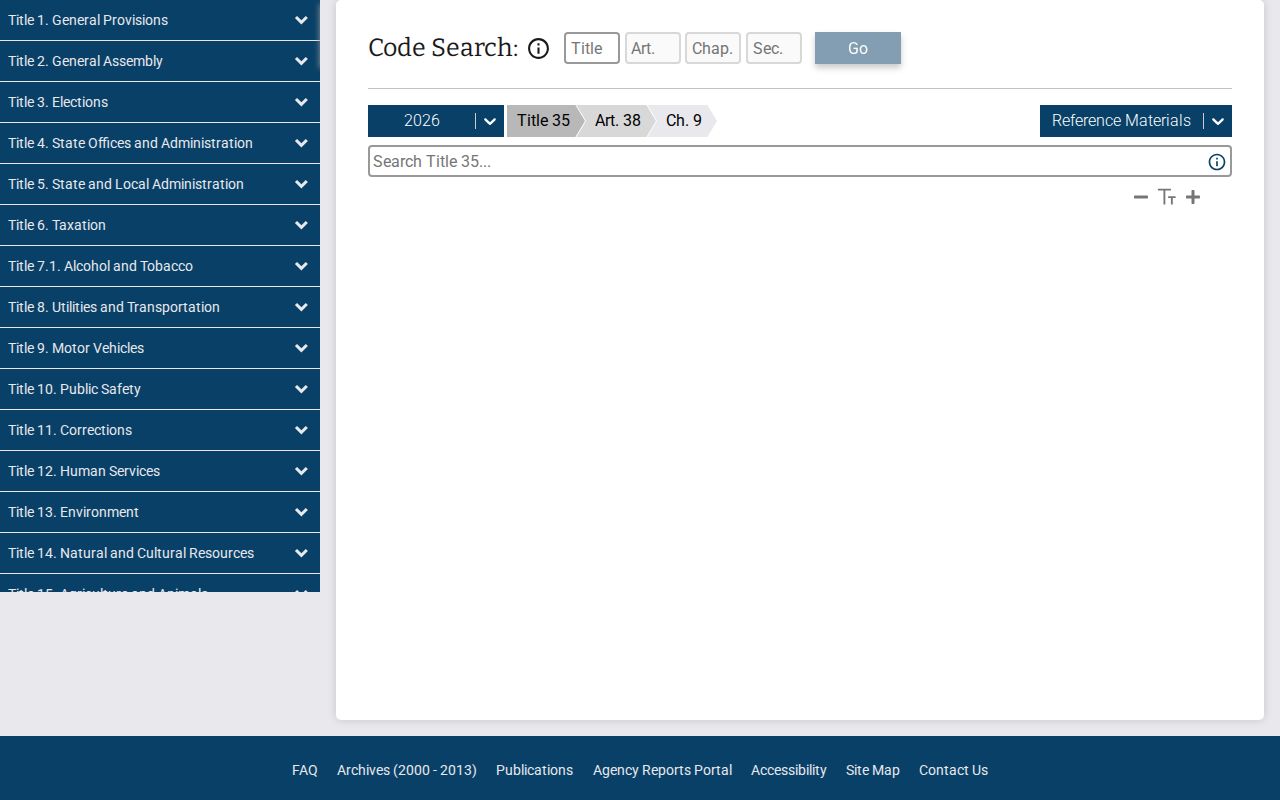
A lawful expungement can explain why an old docket search and a current one differ.